Monday, April 27, 2009

Cstrike Servermonitor

Laajavuori School Free School Supplies - orders for the next school year

small work for a good cause ;-)

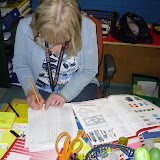
Yikes, who is this so hard, concentrating at work?

My "mentor" these days is about a page-long list of tiny print, a table-like divided and afflicted with many free fields scrolls, parallel in a catalog and with numbers on the list.
What makes it just as?
This looks really do not like teaching materials and also to prepare lessons! But what else does a teacher in the school at her desk?
looks highly concentrated on them and is reluctant to interfere ... but to me it makes an exception ;-)
The resolution is: It makes the teaching and learning tool orders for their upcoming new first Class in the next school year!

Aha, now I get some clear!
The full cabinets with books, pens of all kinds, sharpeners, rulers, scissors, glue sticks, paper, etc., etc., in every classroom is not just there (well, that was a little bit just thought of me ...) but they must be appointed to the laborious work of the / class teacher of the future! be estimated
therefore you will have seen the first, which is still there and usable, then depending on class size, as consumption will be in a school year and then again the quality of existing products are reviewed and compared. Thereupon catalog and placed an approximately ten-page list next to each other and go with the smallest work: first, the teacher chooses from a selection of about eleven different sharpeners (for example), what she wants now, then it must be the name and order number This sharpener in the list, then consider the price and skip to the end the number to three parallel classes and super in the small print List to enter. And this process must be repeated each school supplies. The poor ...

Overall this is a work about 5 hours if you will not be disturbed and working alone. Depending on grade levels teams can also work in a group. Both have advantages and disadvantages of course.

The great thing is - if we ignore the work - that the children will start school in the classroom and it's taken care of everything! No one has to exercise books, erasers, pencils, etc. Now! It's just all there!
I find this teaching and learning material to 9 School year just great!
It may be in Finnish classrooms not to say (as I've heard in some of my class often): "I'm not a leaf," "I have nothing to write," "Can someone lend me a hand and a pen?" No child
and no / e Teenager must ensure ashamed and humiliated that the parents have no money for school supplies (or want to spend), whether it is a pin or a workbook. Here in Finland it is obvious that the school (or community behind it) for any school books and school supplies makes any!

Dear colleague, it's worth the work! I would be such Listen fill in like it when the policy would only provide the money for the material available ...

orders for next year

Sunday, April 26, 2009

Eplain What Is Anaemia

insights in a Finnish Intermediate (grades 7-9)

through puberty must have Every by ...

So far, my observations, that the Finnish school girls (grades 1-6) and the Finnish upper secondary school students (after the 9th grade) are not comparable mentality with ours and a great shyness, and high zeal to , get to rest on the day. On 22 April 2009, I got it then finally managed to visit Martinlaakson koulu that includes the school years 7-9. There I found the evidence to counter this hypothesis, and there I saw a familiar image: the youth in the age of 14 - 16 are very similar to our but! The phase of identity and self-discovery and the setting "The main thing against it" no one can escape. Specifically, the

was that teaching was not as quiet and undisturbed to be carried out, as in the lower grades of comprehensive school (up to Grade 6) or the upper classes. It was felt among young people in the age groups 7-9 this "zero-Bock-mood", as do Here in Germany (at least that was my experience in the primary and secondary schools) the case. Other things such as clothing, styling, cell phones, music, cool, provocative exchanges with other students during the lessons, etc. are given in this phase of life more important than school teachers, grades and education. However, I must say that the classroom disruptions were not as huge as I have experienced in my teaching part. Thus found a number of private conversations held in the back rows, which at times were a little louder, but the lessons could still be pursued and did not affect those who wanted to learn. The attitude of most teachers at the school was (as I observed the have) to let the young people at rest (as long as the side conversations were not too loud). It was therefore concentrated on those who wanted to learn something. The young people then have the duties that have been referred to it, always started immediately and conscientiously done, without complaint. I was under the impression that the pupils was made practically free, if they wanted to participate.

This principle of freedom and of ignoring was also applied to the (few) are very difficult cases. One student, for example, could make as much as possible what he wanted (of course only up to a certain degree) and teachers have let him have his way. He does not have the classes attended (he was already physically present) and private discussions with his immediate neighbors. However, it was surprising that those returned were alone after a certain time to their duties and him too mitzogen. At no time during the school day, the side conversations or other (unwanted) behavior of the students have taken the upper hand and influences the teaching negatively.

One reason for the restrained behavior of teachers and their attitude "to grant the students have" one hand can the understanding and the acceptance of a difficult period in which the young people be located. On the other hand, it could be that the teachers put the responsibility for successful learning in the hands of the students themselves, their skills in a variety of tests that need to provide proof. Even in middle school is the school year made as similar as in the secondary school: The school year consists of four periods and a period of approximately eight weeks. During a period show the students around six core courses (4 each week) and then in two to three courses and an optional sports that include fewer hours per week. At the end of an era is a test week in which the students then about six to eight tests (usually put in writing) must. If they fail inspection, they must repeat in an investigation or the course. There is therefore in the best interests of young people themselves, to cooperate during the course to pass the exam. A German teacher said that this test weeks were a major psychological burden for the young and very stressful for all concerned.

In terms of teaching always came back to say how great the pressure from the curriculum. In the eight weeks you need (or should) work through a whole course book (textbook and student workbook) and will be reviewed at the end. That meant the consequence that at the school level and The pace was very high. The majority of the teachers centered accordingly and notify textbook-oriented. (Of course this is just the impression of a day. In English class I have a great group work as seen in what made the young people an advertising poster for a district of Helsinki and Vantaas have. They were very creative and motivated, although the conditions in the computer room very cramped and they were also three of sitting at a PC, the discipline was very high and great results) the student was -! as mentioned above - left to themselves, whether they cooperated or not. Those who have ambitions to move to the upper secondary school and high school to Have to make the ambition to work conscientiously. This setting is used in some, at some later date. Finally, 50-60% of an age to go to the 9th Class at the Gymnasium.

More information about the structure of the school:
• The 400 students are housed in a large school with three floors. The hallways are decorated with many students' work, posters and teamwork posters. Above the staircase hangs a giant poster (painted by students), which counts down the days until the start of the summer holidays. On the top floor are the administrative offices and a large, spacious and comfortably furnished Staff room (with sofas, a kitchenette and PCs), which extends over practically the entire floor.
• The construction of the school day is also very appealing to me and brings peace and relaxation in the day: Classes start at 8 clock. Each lesson is 45 minutes. After each lesson there is a 15 minute break! From 11.45 - 12.15 clock is lunchtime, which concerns the whole school community to have lunch in the cafeteria. From there, the rhythm is 45 minutes of instruction and 15 minutes of rest, until the school day ends at 16 clock.
• From the 7th Class, there is no longer the teacher principle. The students are taught by qualified teachers. It is hardly taught different subjects (And if so, then only in the sphere of his own subjects, eg physics, if you have studied biology and chemistry).
• Pupils in the compulsory subjects taught in class, also offered in select optional courses and are with other students of a year of course.
• Each class / e supervisor is assigned to replace a / s class teacher. It takes to organize themselves for this class. Every Wednesday from 12.15 - 12.30 clock held meetings between supervisor and class and it will be passed on information or colluding or discuss current events.
• For large problems a young person is working in a team: parents, school psychologist, teachers, special or social worker and the / affected the young people work together to solve the problem.
It was a great experience for me to visit the intermediate and draw many parallels with German students at this age to be able to!

Furthermore, there was a lot of fun, two hours in two different German 8th to teach grades. For this I have chosen the theme "love" and discusses two German love songs. That said, the young people mostly! Although I have seen both study groups had never before and the students I have never seen before, they gave me (taught by the teacher) asked prepared questions and we got talking. The students were very well understand German! They found, however, very difficult to express themselves. It is suspected that it was because of their fear of making mistakes, and (culturally determined both) of their shyness towards new people, but not to speak of their real property, in German.

I hope to get in the remaining two weeks of school even more insight into the Middle School!
Letter Sample To Disconnect My Telephone Line

characteristics of Laajavuori the school

Twice a year there are big tests for the students: first
Take off the school year all children to participate in a math test. This is designed by the school authority and is responsible for all schools in Vantaa same for each year. The test is based on the curriculum of the previous school year. The test would examine the state of knowledge, as it should be after a school year. The result is interesting in two respects: First, it shows what children need extra help and support. This is relevant for teachers. Second, it provides insight into the school office by the respective schools and how much money they need for the promotion of individual students. Depending on the needs then a school can once a week extra funding . Offer But you get the teacher 25 Euro per 45 minutes.
second Once a year the students take compulsory part of a test for reading comprehension. This was developed by the University of Turku and bought by the Laajavuori school. The tests are evaluated by the university. The results are particularly instructive for the school because the students are divided into three groups: very good, average (good); needs. Depending on the assignment in a group of pupils from the last group support in reading obtained by the Finnish special education teacher or the teacher. It accordingly especially the children of immigrants support - Depending on their performance in reading compared to all children.


The school places great emphasis on parental involvement. At least three times during the school year, parents are invited for talks or meetings in the school. Everything that goes beyond that, is in use and in the capacity of individual teachers: first
At the beginning of the school year there is a great parents' evening. All parents are first greeted together in the gymnasium of the school management. Already there are the school's goals made transparent and highlights the responsibilities of parents. In the second phase of the parents' evening, parents are divided among the class teachers of their children. In the respective Classrooms will be again discussed the rights and duties of children, parents and the school, it explains what the child can learn under what conditions and the individual objectives and priorities of the respective class teachers are explained. Feedback and evaluation of, and by parents at any time during the school year and requires desirable.
second Before Christmas, parents are invited by the class teachers to a Christmas craft.
third In February, the mandatory meeting comes at a "mid-term evaluation" with child, parent and teacher. The teacher has several days left for the evening individually with all students in their class and their parents to take. It is discussed, where the child is currently, as in the course of the 1 Half-year has developed, as in the 2nd can improve and develop half of the year and and what can be from home and from the school done in support of this.
4th Further meetings are voluntary and are at the discretion of the teacher.

communicate addition, teachers and parents (especially in the early school years) on specific issues. There, the teacher gives regular feedback on the development and behavior of the child (1-5 times a week). The parents take the note with a signature and can write their own questions or comments into it. With this Issues have therefore all parties always have an overview on the status of the child (both cognitive and social). In case of problems parents are invited by the magazine at a parent meeting at school.

Saturday, April 25, 2009

Becoming A Light Sleeper

visit in Vantaa Sotungin lukio

It is also open

:-) I finally managed to visit the high schools of Sotungin lukio in Vantaa. Even before I had a very nice conversation via e-mail with the deputy head teacher and we agreed on 20 April 2009 for a 1-day visit to this school. I spent a whole day of school from 9-15 Clock at the school and this was a very fantastic experience for me!

the early arrivals I was very impressed with the school grounds! It was a very large area, spacious and offered a lot of room for different sports grounds and sporting activities of all kinds! Later I learned that the school is including a focus on sports and many students already at the No. 1 in football, hockey, etc. are. But one by one. In the school itself, I was very warm and friendly welcome from the deputy head - after some initial difficulties because I was sitting in the wrong office, namely that of the middle school and the grammar of the Colleges! The deputy head had been looking for me! That was very unpleasant for me, but we did not directly laugh together! She then introduced me to some colleagues and the openness that has been shown me of them - amazing! That was something I had hardly been used! The teachers were very interested in me (where I come from, what I'm doing right now, what I think of the Finnish schools and how the school situation is like in Germany) and they said almost all spontaneously German! Even if they taught no German! Just great! I felt very comfortable right away!

then led me to the deputy head of the school and showed me both the premises, which are used jointly by the middle school and secondary school, as well as the corridors, the older of the students be used. I felt an open, relaxed and welcoming atmosphere throughout the school! This is encouraged in my opinion one hand by the white walls with student work (paintings, sculptures, exhibitions) are designed, and by the many large windows that the light in the school building. On 1st Floor is a large cafeteria, which this week focused on the theme "Chinese food" (like the whole school's motto, "China" was.) (General, the international Another focus of the school. She is involved in two Comenius projects that before the summer recess in late May in a celebration at the school open.) Furthermore, there is a large library for the students is always accessible, and a stage for parent meetings, performances, etc. In the hallway of the 2nd Floor are red sofas and armchairs that invite you to linger. In the same area is also a large room with many PC computers (as well as additional computers in the hall), which can be used by all students at any time (up to 21 clock) without the supervision of teachers. The Internet is also freely available to them. I think the great idea that the young people so much is trust and they learn responsibility in this way. It should be noted however, that in this Region a camera. It seems the young people but not in their movement and restrict their actions.

from 9.15 - 14.55 clock I've watched a total of five different classes, teachers and subjects (2x English, German, history and math). All teachers were now open and ready to let me sit in, even if it was not always discussed in advance! I was very surprised and happy! The deputy head repeatedly stressed that the school visit was used: in the German speaking countries (especially Germany ;-)), of (German) interns, but also by other teachers from the immediate vicinity and Finland. Thus, the colleagues of the school internships usual and the doors are always open for guests!
The Finnish students responded - it was not expected otherwise - very reserved and had, after I introduced myself briefly, no questions at me. The German teacher used the opportunity to find a native speaker to have in class, and let me tell you more about the German school system compared to the Finnish. Then a student dared to ask me where I am from Germany :-) Overall, I have regard to the teaching again noticed the high level and pace, some of large classes in almost any classroom disruptions (Big event), the many teachers lectures as a teaching method, and working with the book. In this regard came from the teachers again and again, the high pressure through the curriculum for language. Finally, the students stood before the Finland-wide central high school.

Another feature of the school next to a focus on sport and the international "virtual learning" was. want to both adults and adolescents of this school to deepen their knowledge or repeat the material - the school offers online courses in the form of specific subjects on the one Fronter' platform. This fact indicates already on something else out: the technical equipment of the school in general and of each classroom in particular. Every classroom that I have seen, includes: laptop, internet access, LCD projector, large projection screens, document camera and CD / DVD player with speaker system. Most classrooms also had no chalk boards anymore, but white boards with special whiteboard markers. (The principle of using similar course, the traditional blackboard, however, was faster and was cleaner! According to the deputy head to have the highest number of teachers opted for the renovation of the school 10 years ago for whiteboards.) Some classrooms were also by a whole class set of wireless headphones feature, which is especially an advantage for foreign language teaching.

My absolute highlight, however, was the SMART Board in action! Although I have heard a lot of it, but it never seen in the teaching practice! I was really excited total! What an experience! A math teacher invited me spontaneously in their teaching (thanks a lot!) And the main medium was just the SMART Board. She said she did not want to miss it more and it had become a major component of their teaching. Still, during a working phase of the pupils, she encouraged me to try the interactive whiteboard even once! Of course, it tempted me into this Moment for all sorts of gimmicks, but I must say, it really drew me in its spell! The SMART Board has an incredible number of applications and uses that can be used in the classroom and in the classroom! In addition, there are some programs for all subjects with images, templates, worksheets, games, etc. Nothing that is being developed, is lost because the interactive whiteboard is connected to the PC and all the "panels" can be saved. The math teacher made great use of it and put all the hours on the Internet on the results, Fronter' platform, which in turn is accessible to the math course. Thus, a repetition and dealing of the substance at any time possible. For me this was a fascinating experience!

However, the fear of contact with the medium, according to testimony of the teacher at her school also very high and only used by her chemistry teacher, the SMART Board. They even encouraged colleagues again to heranzutrauen to the touch-sensitive whiteboard, because the operation is to learn quickly, mostly because it resembles that of normal PC programs.
Generally the teachers of this school, however, very open to new technologies, especially when it comes to new applications on the Internet or offline programs. The deputy head said that the oldest colleague was at the school the fittest! It many courses and training for teachers offered, in which she introduced to the use of new media and trained. These courses are readily accepted by teachers and attended numerous.

Overall I have felt very well at this school! It was a friendly at all times taking care of me, even if it was only a 1-day visit! A visit to this school is highly recommended!

Wednesday, April 22, 2009

Where To Buy Grip Tape In Singapore

Active development and creative exploration of the individual chapters in the book "Different teach school do differently"

The seminar "productive dealing with learning and behavior problems" is designed so that we on the one hand for a specific time schedule, the individual chapters of the book "Different teaching, do differently School" by JB read and the other is read together to discuss, but more work still drawing on kreativierende methods and procedures in ever-changing small group compositions, implement, creative, design, own thoughts, ideas and experiences expressed etc.

starting questions put to the discursive part:
What spoke to you?
What inspired you?
What did you hit?
What was new or surprising?
What you see is critical?
What made from what is read with the link so far in the study acquired / appropriated knowledge? What
of what is read helped you, your personal identity / professionalism as childhood scientist Next auszuformen?
What can / do you take to get to and from a repertoire of knowledge backgrounds, attitudes, techniques, tools, etc. for the school counseling or monitoring process in schools, the teachers-coaching, etc. together?

then applied over time as part of the seminar kreativierenden Auseindersetzungs and Expression:

developing / • Create a rap song on selected aspects of the chapter ... and practice it on to him then to present in plenary. This has happened in the first run. The very impressive results could be posted here as an audio or video files.
Place Read in the form of a small improvisational theater, an improvised piece of music, etc. order.
Set to what you read in the form of artistic / pictorial designs, as a pantomime, as a poem or a piece of literature ...
then can the issues and problems in implementing more scientific sense, by developing questions for research, research, or by designing models and approaches for the advisory work of childhood, scientists at schools ...
Other ideas are welcome ...

results and documentation on all of these processes can be set here. Because where you, the user does not have the necessary rights to set of materials available, send these materials to Timothy Lemme, or give. It will install everything.

Sunday, April 19, 2009

Should Gallbladder Polyps Be Removed

German project "Voice star"

On 15 April 2009 was held at the school Laajavuori a project day to promote German language and motivation for learning German. In cooperation with the Goethe-Institut , the German School of Helsinki and Project manager Jan Quilitzsch ( TietoTaito Ry) and the coordinator at our school, Sirpa Rönkä should be carried out a project that appeals to children and young people of today. Why were the focus of the project, new media, the interest of the students in music and idols, the initiative and activity by the students and the principle of "Younger students learn from older students, who came from the German School of Helsinki. Thus was also guaranteed that the language of the day (mainly) German was.
The original idea of the project manager was to organize this day only for the German classes 4, 5 and 6. But on Initiative by the German teacher Sirpa Rönkä was the whole school for it to be won to set their own priorities that day, all around the theme of "German" (German speaking countries, colors, geography, art, music, literature, etc.), mainly but were conducted in Finnish.

All German learners have, however dialed into five workshop groups:
• Fruit salad group led by students of the German School and Ms. Kleiser, director of language department of the Goethe-Institut Finland, has dealt with a German software tasks is processed through stations, and at the end of a fruit salad made (and eaten :-))
• The Art Group, led by students of the German school and a teacher at our school of recyclable material has designed the sets.
• The dance group led by a student of the German school and the school social worker has a rehearsed choreography.
• The music group led by students of the German school and a teacher from our school has practiced a song.
• The press group, headed by a media designer, a teacher from our school and I documented the entire project day.

The entire project day went to an event - the highlight of the eventful day - the appearance of a student of the German School, which won "Young Musicians" the first prize at and should occur before the entire school community. The soundtrack was this performance by the singing of German and Swiss children's songs and a traditional Finnish song.
The appearance of the new talent of the German school (and who knows, maybe soon Finland far), Silvius, has swept our students with his German pop music and totally thrilled. He was supported just by the music group, which was the background for him. Moreover, the sets and the choreography of art and dance group has contributed to the success of the performance.


The evaluations in the German classes the next day revealed that the pupils the project day have consistently with good to very good, like this again them carry out a project and would have always felt well looked after - even in German-speaking group management. This was because the students met the group leaders of the German School in part in the run-through videos. There, asked this before and told a little about yourself. This phase was the testing and introduction of new Teaching materials (mainly in the form of new media) in the teaching of German dar.

a special role taken by the press group (sixth graders). Their mission field was very diverse and extremely demanding. So there was the team from an interview-group (interviews were conducted by children and even filmed), (have photographed all school activities), photographers, designers (the information on station names, names of teachers and all students have been sought) and reporters (which draws in each class and each workshop notes on their observations - in German !!!). Thus came the end (unfortunately, due to the diversity of their work could only be made the next day) production, a wide-ranging and detailed documentation of the project day out, which gave a good insight into the activities of the day:
• the media designer is a professional Making Of - Video
• produced by the students themselves were the following Results: 1st
a video show (Power Point presentation with even filmed recordings)
second a photo show (Power Point presentation with homemade photos)
third A wall poster (two huge wall poster with all the classrooms where activities have taken place, filled with photos and names of all parties, wall poster now hangs in the foyer the school)
4th A report (in German (using a standard text) and Finnish (translated independently), and the report should be read in connection below)

I participated in the planning, preparation and implementation of the project, I have a tremendous amount of I learned and look forward to further their own projects that I can perform at a German school. The time involved is of course very high. Therefore, team work and cooperation in the college and with external cooperation partners, the A & O. And if you will, is all :-)

Sunday, April 5, 2009

Full Board Accommodation Means

Entertainment 31 March 03 April conference 2009

This week I have seen a bit more of Finland :-)

On Tuesday, 31.03. I took a trip to Turku in southwestern Finland. Two ladies from the Martinlaakson lukio have invited their German intern for a trip and brought me kindly! I am very grateful! With the car we went in the morning on his way. The weather was on our side: although very cold, so it was sunny (after the snow storm at the weekend that was not necessarily to be expected!). Our 1st Stop was in front of Turku at a glass factory. Finland is known for his glass designs. Behind the sales floor, glass manufacturers were on display at work. Your skills are truly enormous!

arrived in Turku, we first visited the university, where one of the Finnish colleagues studied and worked. Then we took a long walk by and visited Turku in particular the cathedral and castle. With the car we drove, even after Naantali, a beautiful small town where the core of the typical Finnish wood architecture house there. There, we took a long walk :-) In the summer there and the Moomin theme park has opened . In Naantali, there is also the summer residence of the Finnish president. Your lock is flagged with the Finnish flag, if it is there. Then we strolled through the city of Turku, looking purely at some stores.
Whether it is worthwhile to Turku from Helsinki by train or bus to visit, is more questionable since the tickets are very expensive and one is on site often rely on a car, especially when you like to also go to Naantali. Otherwise it is very complicated, but not impossible, of course!

is historically an important city of Turku: Turku
was the former capital of Finland (to the 19th century) and its origins lie in the 13th as the first city in Finland Century. There also the first university in Finland was built. After becoming the capital Helsinki, the University was relocated there. Some institutions, however, are still in Turku and one can continue to study there.
The Cathedral of Turku is Finns important because it is the oldest church in Finland. The Turku Castle was built in the Middle Ages and is still well preserved.
is from a particular building (see pictures) in Turku and the 'Christmas Peace' on 24 December proclaimed that represents the beginning of Christmas for the Finns. The majority of them followed the proclamation with the TV.


On Friday, 03.04., I accepted an invitation from a colleague to Hämeenlinna, about which I was delighted! After school we drove north by bus to the small town 100 km from Helsinki. There we first visited the birthplace of Jean Sibelius, the largest Finnish composer, where he spent his childhood. Meanwhile, is in this wooden house a museum and it can also be rented for parties. The City of Hämeenlinna is very proud of her famous child "Sibelius, that there also went to school and has graduated from high school. In addition, the landmark of the city, the Häme Castle, which is also the name of the place - just Hämeenlinna. The castle dates from the 13th Century and is very well preserved. For me as a history teacher, these remnants of the past are of particular interest, of course :-)
Following the visit I met the family of my colleague know that I received very nice. We ate together very tasty dinner and I felt comfortable there! I thank the family for inviting me and I appreciate this gesture very much, because I know that the Finns their freedom, their place and need privacy and feel very important. It is - for cultural reasons - very typical to provide a 'stranger' insight into this protected area.
the evening I took the bus back to the capital. As I said, the infrastructure in at least southern Finland is very well developed.

On both trips to the Southwest of Finland to Turku and Hämeenlinna in Finland under the direction of funds has offered me a similar landscape: vast snow-covered Fields, large forest areas and some high granite cliffs, by the way for the motorway free of broken or tunnel was made passable. Between the cities you hardly find places, more isolated houses. Most of the routes between the cities, however, flat and uninhabited landscape underscores.

Now some photographic impressions:

Turku and Hämeenlinna